AWS (Amazon Web Service) is a global market leader in Infrastructure as a Service (IaaS) and Platform as a Service (PaaS) industry, offering a wide range of remote cloud services. In this article,
It’s a cloud computing platform that enables users to access on demand computing services like database storage, virtual cloud server. Amazon’s cloud web hosting platform offers flexible, reliable, scalable, easy-to-use, and cost-effective solutions. This tutorial covers various important topics illustrating how AWS works and how it is beneficial to run your website on Amazon Web Services.
So first let's understand what is Cloud Computing?
If you’re unsure about the Cloud Computing, you are probably among the people already using cloud services, like online banking and social networks, but don’t realize it.
The “cloud” is a set of different types of hardware and software that work collectively to deliver many aspects of computing to the end-user as an online service.
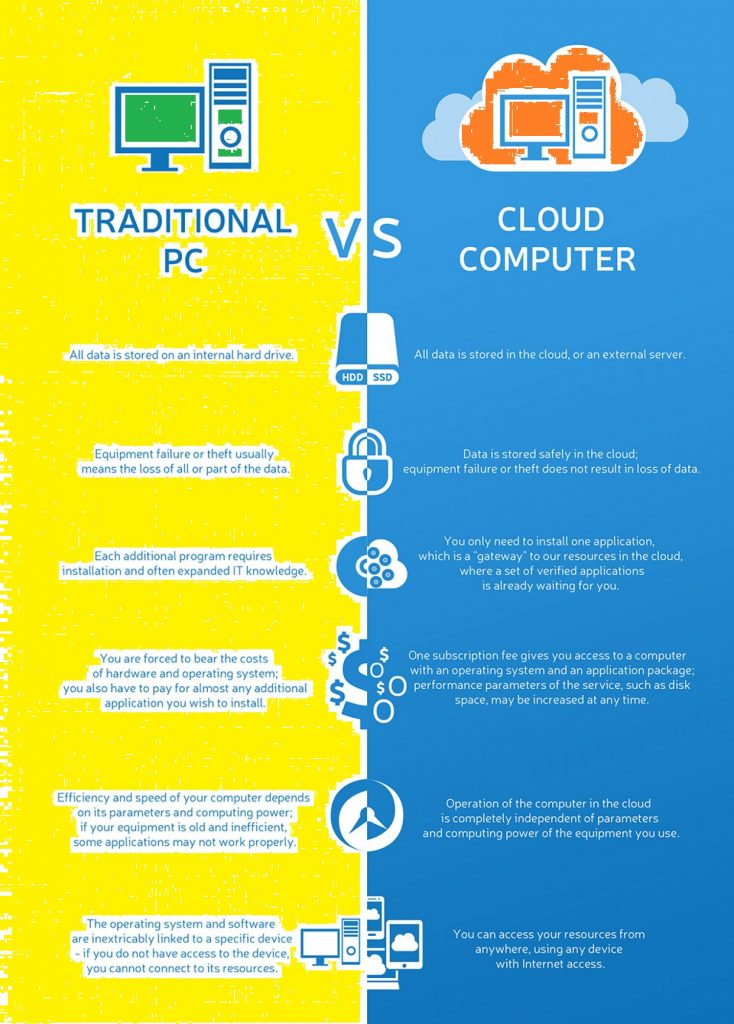
Cloud Computing is the use of hardware and software to deliver a service, usually over the Internet. With cloud computing, users can access files and use applications from any device that can access the Internet.
Cloud computing is also a term referred to storing and accessing data over the internet. In cloud computing, you can access data from a remote server.
One of the most popular example of a Cloud Computing provider is Gmail. Gmail users can access files and applications hosted by Google via the internet from any device.
What are Public, Private and Hybrid Clouds?
Public cloud
Private cloud
Hybrid cloud
· A Public Cloud is based on the standard cloud computing framework which consists of files, applications, storage and services available to the public via the internet. Gmail is an example of a Public Cloud.
· Public clouds are owned and operated by a third-party cloud service providers, which deliver their computing resources, like servers and storage, over the Internet.
· With a public cloud, all hardware, software, and other supporting infrastructure is owned and managed by the cloud provider. You access these services and manage your account using a web browser.
- A Private Cloud is comprised of files, applications, storage and services that are implemented and protected within a corporate firewall, under the control of a corporate IT department.
- A private cloud refers to cloud computing resources used exclusively by a single business or organization.
- A private cloud can be physically located on the company’s on-site data center.
- A private cloud is one in which the services and infrastructure are maintained on a private network.
- An example of a Private Cloud would be a company that uses Microsoft Exchange because Microsoft Exchange can only be accessed by an authorised user through a secure VPN connection.
- Hybrid clouds combine public and private clouds, bound together by technology that allows data and applications to be shared between them.
- By allowing data and applications to move between private and public clouds, a hybrid cloud gives your business greater flexibility, more deployment options, and helps optimize your existing infrastructure, security, and compliance.
Three models of cloud service
Infrastructure as a service (IaaS)
Platform as a Service(PaaS)
Software as a service (SaaS)
- Infrastructure-as-a-service solutions generally get to the level of ‘bare metal’ — the physical servers, networking components, and device storage necessary to make platforms (and, hence, services) functional.
IaaS is popular with corporate clients, with tradeoffs between speed, cost, and privacy that each vendor balances in different ways. - The most basic category of cloud computing services. With IaaS, you rent IT infrastructure—servers and virtual machines (VMs), storage, networks, operating systems—from a cloud provider on a pay-as-you-go basis
- Vendors that offer platform-as-a-service portfolios generally face corporate clients.
- PaaS products include virtual servers, operating environments, database environments, and any other middle-ware component that sits between the hardware and the consumer-facing application.
- PaaS is designed to make it easier for developers to quickly create web or mobile apps, without worrying about setting up or managing the underlying infrastructure of servers, storage, network, and databases needed for development.
- Cloud services using a software-as-a-service model, or SaaS, provide fully functional programs to end users even though the programs may not be resident on their local computers.
- Software as a service is a method for delivering software applications over the Internet, on demand and typically on a subscription basis.
- With SaaS, cloud providers host and manage the software application and underlying infrastructure, and handle any maintenance, like software upgrades and security patching.
- Email providers like Gmail and Outlook.com are SaaS applications, as well as just about any computer program that runs inside a browser.
Now let's see what's AWS?
- AWS (Amazon Web Service) is a comprehensive cloud computing platform offered by Amazon that offers flexible, reliable, scalable, easy-to-use and cost-effective cloud computing solutions and enables user to access on-demand computing services like database storage, virtual cloud server, etc.
- It works on “pay-as-you-go” model that means – you don’t need to pay upfront for services it offer. You pay for only how much service (mostly bandwidth) you consumed at the end of billing cycle.
- The platform is developed with a combination of infrastructure as a service (IaaS), platform as a service (PaaS) and packaged software as a service (SaaS) offerings.
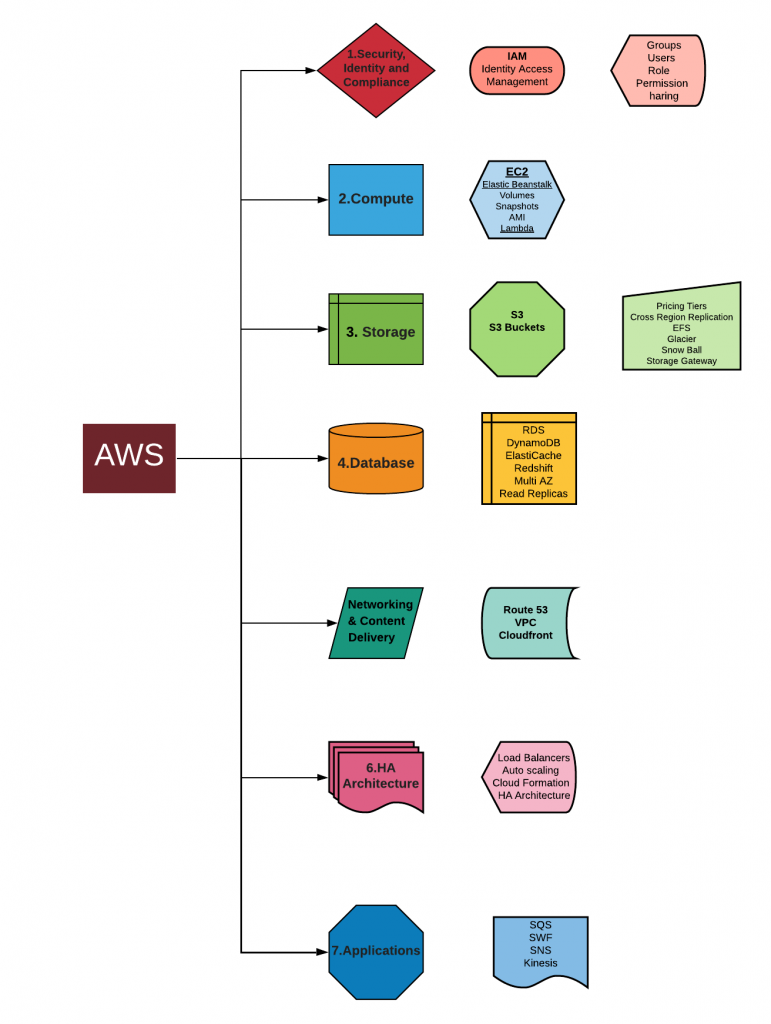
AWS Components
AWS Global Infrastructure
AWS Regions
Availability zone
Edge Locations
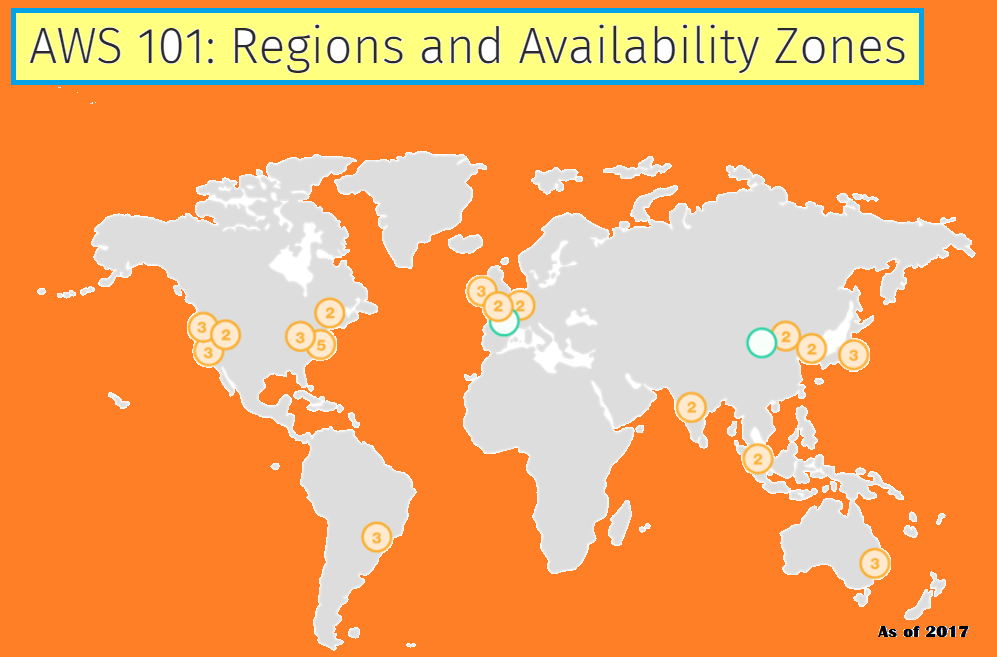
AWS Region, is kind of framework, in which we have all the available providers.
An AWS Region is a geographical location with a collection of availability zones mapped to physical data centres in that region. Every region is physically isolated from and independent of every other region in terms of location, power, water supply.
Example:For EC2 instance, Storage, DB – we need a region in which we can build our services). We have 17 Regions at the time of preparing this tutorial.
An availability zone is a facility that can be somewhere in a country or in a city, it’s a logical data center in a region available for use by AWS customers.
Each zone in a region has redundant and separate power, networking and connectivity to reduce the likelihood of two zones failing simultaneously.
An availability zone can be a several data centres, but if they are close together, they are counted as 1 availability zone.
Edge Location are the locations where end user services are provided.
Edge locations are the endpoints for AWS used for caching content.
Edge locations are more than regions. Currently, there are over 150 edge locations.