As we race through the 2020, challenges in front of Testing(more specifically Automation Testing) are increasing by leaps and bounce primarily attributed due to quick Agile development cycle, where development and release cycles involve releasing a set of features and extending those sets in iterated releases. Some of these challenges can be counted as picking the right automation tool, highly Skilled Automation Testing experts, high upfront expanses and testing always being under time constraints.
And it’s very well said that necessity is the mother of invention therefore some of these challenges have given birth to the industry’s newest innovation idea “codeless test automation”.
So what is the Codeless Test Automation?
Codeless testing as the name implies, refers to an approach where test cases are automated with a minimum of code.
Next generation codeless test automation still leverages record and playback, but unlike legacy tools that record “static” test cases, many codeless tools are equipped with machine learning and AI capabilities which provide test re-usability, stability, and minimal test maintenance resulting into the lower training and maintenance upfront cost.

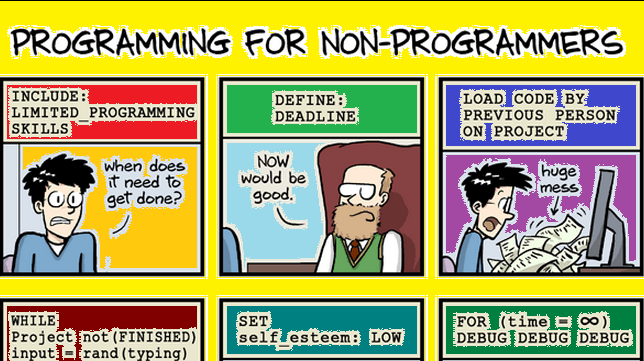
Challenges posed by Traditional Automation Testing tools
A high bar for testing experts – Test automation requires technical skills to design and maintain test automation framework, scripts and resolve technical issues therefore, in order to fulfil the requirements, strong programming skills and solid test automation tools knowledge is required. This is perhaps the most primary challenge in traditional automation tools as it causes multiple other challenges including dependency on specific resources, attrition, high upfront costs.
Frequent releases, Time constraints – For large projects having a fast release cycle, creating a test environment, and writing test scripts take a huge amount of time and resources which ultimately defeats the purpose of automation testing which was originally aimed at reducing testing times and resources.
Multiple setups required – Traditional automation testing involves writing separate execution scripts for each test case, and then executing through a separate setup dedicated to running, monitoring, and logging the test cases.
Significant Investment – As mentioned above, multiple attributes like Training, hiring specific resource, licensing, hardware and software costs make traditional automation tools an expansive affair sometimes and in spite of understanding the ROI in the long run, many people tend to give up test automation looking at the high upfront costs

How the challenges are responded by Codeless Automation?
This problem had led to devise a solution in the form of codeless testing. Codeless testing creates automation tests without writing a single piece of code or minimal code.
This approach has been continuously evolving with new innovation on technology, focusing more on reducing the coding process and making it more user-friendly.
The ultimate aim is to save time of testers in coding the functionalities and focusing more on Business scenarios, functionalities and on the core – bringing the quality through the optimal test coverage.
There are multiple approaches behind codeless testing. The most prominent are:
– Recording tests and playing it thereafter.
– Creating structured test flow diagrams using test blocks provided by tool(s) and later the test flow is used to run tests.
How Codeless Testing Works
Codeless test automation functions quite similar to enterprise codeless platforms. Both take complex tasks traditionally achieved by coding and simplify them through automated code generation.
In the codeless test automation, a tester creates a flow by visually binding elements that represent “clicks” in the application. The tester simply goes through flow of the scenario and the code for the test is generated behind the scenes.
Idea behind the codeless automation is that Testers could focus their efforts on Business, testing functionality and evaluating the user experience rather than struggling with code of the testing framework.
There are multiple approaches to codeless testing. The two most prominent ones involving recording manual tests and playing it back and creating structured test flow diagrams that are used to run tests. The record and play approach is the most popular one right now and especially favoured by web-based products.
Features expected from codeless test automation tools
1. Ability to Build Comprehensive Logic:
Make sure the approach or tool you select allows you to build complex logic and achieve interactions with complex web pages.
Common programming constructs such as conditional blocks, loops, arrays etc., should be easy to handle.
2. Smart element locators
One of the biggest challenges with the code based automation tools like Selenium, UFT, Test Complete is that when the application changes, those automation scripts may fail.
Codeless automation can resolve it by gathering more than one element locator during the recording. In case a locator is no longer identified during playback, the other locators for that element can be explored. Therefore smart element locators are an opportunity for the codeless automation in creating stable tests with less maintenance.
3. Conditional waiting
Record-and-playback tools that require wait times between steps are again a challenge for the testers.
In conditional waiting, approach, scripts wait intelligently until a condition is true and then proceed as soon as possible.
This drastically cuts down on the execution time of the automation suite. Codeless tools should allow testers to insert conditional waiting. Alternatively, the tools took care of this behind the scenes.
4. Flexibility in handling the dynamic applications
The ability to configure the identification criterion for a complex UI element is very important. A good solution would visualise this.
5. Control structures
One of the major limitations of older record-and-playback tools is the absence of control structures, such as loops and conditional clauses.
In coded automation frameworks, testers use loops and if-else clauses to control the flow of scripts. This is a necessary requirement for codeless solutions.
6. Maintain the Business Process Focus
Test representations should reflect business process flow and directly connect with how your end -user exercises the system.
7. Easy assertions
Recording a scenario is fairly easy to do. As the user acts on an application, the tool records those actions.
However, when a user validates the actions, that does not usually automatically include a web action which required a manual action of addition of assertions, again a time-consuming task.
That’s the opportunity for the codeless automation. The process of adding assertions should be as simple as adding the navigational steps.
8. Offer reusability
A codeless approach should incorporate modularity and re-usability at the centre of the design. Oftentimes, this is overlooked. Remember, it is not just about easy test creation, but sustainability across multiple releases and changes that the application goes through.
9. Modification without redo
Some of the existing record-and-playback tools do not allow to edit recorded scenarios simply. In the event of a change in the application flow, you have to re-record the entire scenario.
Some steps are common in almost every application and reused in multiple scenarios e.g. login scenario. In case there is a change in that common step, every test needs to be recorded again which is again a time-consuming task.
Therefore, codeless tools should allow to record common steps that they can then insert into any test flow. This would not only save time, but also promote reusability and make maintenance much simpler.
Codeless automation tools should make the updates in the recorded scenario as simple as they can.
10. Accessibility
The codeless automation system should be accessible, with the information flow managed transparently. It should be simple enough for extended teams to use, as well as contribute.
11. Cross-browser support
Testers should be able to record a scenario once on a given browser, and be able to play that recording on any other major browsers.
12. Reporting
Adequate reporting is a must have requirement for any test automation. An automatically generated report with details on the description, screenshots should be quite helpful for a tester to analyse the failure.
13. Ability to insert code
In spite of providing the seamless records and play feature, there would still be pressing need to customise the code depending on the specific application’s requirements and functionalities. Hence testers should have the ability to insert code within the tests for those edge cases. For extra points, don’t limit this to UI-specific code, such as JavaScript.
14. Extendibility
There are always occasions where out-of-the-box support is not enough. It should be easy to extend the functionality while maintaining the same level of native simplicity.
15. Continuous integration
Older record-and-playback tools required testers to click a button within the tool to execute their tests. In the era of DevOps, test automation is a key ingredient in continuous integration and continuous deployment.
Tests should integrate with such pipelines and automatically execute when triggered. For faster execution times, tests should be capable of running in parallel as well.

Advantages of Codeless Test Automation
Codeless automation testing tools are a perfect solution for the testers to speed up their work. These tools have taken over the market owing to their ease-of-use and speed. Codeless test automation is particularly useful when it comes to agile software development process .
Codeless Test Automation offers several benefits as below.
1. Less training for testers
Needless to say, when testers need to code their tests, they usually undergo specialised training to learn programming. With the introduction of codeless automation, it is easy to train a number of testers in creating automated tests, without any need for scripting skills.
2. Codeless is Economical with more quality
When testers don’t have to spend all their time trying to automate their regression tests by writing code, they have more time for enhancing the test coverage, tests with a variety of data / business data and exploratory testing.
3. Speeds up the testing and overall release pace
- When automation is designed with visual UI workflows, all code is generated under the hood making automation easy to learn and implement.
- A tester can start test automation as soon as development is completed without wasting time going through complex coding practices and frameworks.
- This makes it easier and Compatible with the speed of the development cycle and continuous integration.
4. Lower maintenance and scalable automation
- With the Codeless automation, following current business rules and best practices makes automating tests more scalable and maintainable.
- For instance, one good example may be introducing the modularity in our test cases. By following this best practice, if changes are made in one of the module, it is not necessary to correct the automation flows every time the system under test changes as codeless test automation depends on native identification of the objects of test use cases.
5. Extend the scope of automation
- The codeless automation process makes it easier to support various types of applications, including desktop, web, and virtual applications.
- More specifically, this means that automated tests can include various interfaces across applications as part or beyond the project. With this flexibility, it is easy to measure the amount of automation from one to several applications, especially, those that include testing automation between projects
6. Improve adoption with a shared automation solution
- Automation Platforms can be used as an one-stop-shop solution for automation needs across an organization. With a UI-based Automation framework, it’s easy to understand flows created by other users.
- This comes with the advantage that users can pick up and work on other people’s flows with little or no hand-over required which is not an easy task in the code-based automation framework.
7. Simplified documentation and updates
- UI workflows work both as a visual description of a process and as a documentation of how that process is executed and all actions and events are recorded in audit trails.
- Generally codeless automation tools come with the audit trails, logs, video as part of the documentation.
8. User-friendly
- Code-based automation requires programming skills and hence can often be tricky and complicated to use.
- Codeless test automation, on the other hand, has an intuitive GUI, thereby making the process of test creation faster and simpler. Thus, even a manual tester can efficiently perform test automation.
9. Integration Capabilities with a lot of Features
- By integrating features such as test management and issue management codeless test automation can transform a testing platform into an entire test suite.
10. Supports Agile
- Regardless of their abilities and skills, all testers, developers or even SMEs and project managers can contribute to the testing process using codeless automation.
- In summary, all these factors combined means that, with codeless UI automation, there’s no pressing need to understand testing frameworks or the technology underlying an application in order to be able to automate tests.
11. Reusable Test Objects
- API First development practices have led to increased usage of service definition files. Codeless provides support to leverage existing API specs while creating and executing test cases.
- For web application testing, Page Object model has been used in selenium automation. Codeless allows full page objects to be defined as simple, creating a single source of truth for UI control locators that can be reused across all the test cases.
12. Layered Data Inputs
Defining test data inputs for multiple test scenarios becomes a headache and time-consuming task.
Codeless takes a layered approach to test data definitions, allowing default data values to be embedded within the application.
Individual test steps can then modify the default inputs as required for that specific test case.
At run time, environment and system properties can be invoked to pass execution specific data inputs, such as service host locations, or user credentials.
Disadvantages of Codeless Test Automation
Although codeless automation provides multiple benefits, there are some limitations that are worth listin
1. Maintainability
One can get into a lot of maintainability issues, If the tests are not designed to be modular and reusable, especially when the number of tests drastically grows, and application is continuously changing
2. Training / Documentation
During the analysis of some codeless test automation tools, users have raised the need of more documentation requirement.
3. Features
One prominent feedback for some codeless framework also highlights the lack of few expected features.
4. Debugging
Debugging will be difficult due to the limited facilities from the tool.
Making codeless a reality
Codeless testing, just like code-based continuous testing, relies on four key elements to succeed: Creation, Execution, Lab, and Analysis. Connecting test flows to a reliable creation and skill set matched tool, that can execute the tests reliably at scale from CI or other scheduler against a solid lab, and which then delivers a single pane of glass from a reporting and analysis standpoint, is a significant leap towards mature continuous testing in DevOps.
Maturity – With the tried and tested traditional approach, there are use cases, best practices, and plenty of opportunities for teams to learn from their colleagues who have done it all before.
Trust – To adopt a newer approach like codeless, teams have to make a leap of trust. This is why it’s crucial to seek advice and information from trusted third parties and tech experts in order to make decisions on how best to integrate codeless into your software development processes.
Change of mindset – Same as with any new ways of working, codeless testing calls for a new mindset – and willingness to change which also requires a good leadership, motivation and a comprehensive plan to make it happen.
Co-existence of open test framework tools – Since codeless automation is still getting matured, there are many scenarios, where traditional code-based automation tools will suit more where testing tools like Selenium shouldn’t be overlooked.
Yes, But what are the Codeless Automation tools?
Here is the list of 10 useful codeless automation tools which might be helpful to understand the presence of codeless trend.
Conclusion
First of all, when we say Codeless, it’s not codeless. It’s hiding code under the hood. The instructions given by the testers on the GUI level are translated into actual code by the solution and then executed.
There are plenty advantages of codeless automation tools mainly the time and cost saving whereas few disadvantages include need of more modularity, features and documentation.
In conclusion, codeless automation is the future. Though the benefits of codeless outweigh the issues with them, however since codeless automation is still evolving, coded automation tools still have their own importance, need and benefits.
